

How to Design a Greenhouse Layout: A Complete Guide for Large-Scale Projects
Published:
2026-05-20 16:09
“My land is big, I want to build a greenhouse.” This is one of the most common requests we receive from our clients as an experienced greenhouse EPC (Engineering, Procurement, and Construction) provider. Designing a scientific and efficient greenhouse layout is the first and most critical step to ensure the success of your greenhouse project. Below is a detailed, step-by-step guide to greenhouse layout design, tailored to help you maximize productivity, reduce costs, and optimize operations.
1. Greenhouse Orientation Layout: Maximize Sunlight Utilization
The orientation of your greenhouse directly impacts sunlight exposure, which is essential for crop growth. We recommend prioritizing a north-south orientation for most regions. This layout aligns the greenhouse with local sunlight conditions, ensuring even and sufficient light distribution throughout the day—critical for photosynthesis and healthy crop development.
For low-latitude areas, a more flexible orientation can be adopted to balance two key factors: lighting efficiency and ventilation. This adjustment helps avoid excessive heat buildup while still ensuring crops receive adequate sunlight, creating an optimal growing environment.

2. Overall Greenhouse Planning: Integrate Functionality and Efficiency
Comprehensive overall planning is the foundation of a high-performance greenhouse. It involves rational zoning, irrigation system alignment, functional area design, and park-wide coordination to streamline operations and reduce long-term maintenance costs.

Crop Zoning: Centralize Planting for Easy Management
Crop zoning should be carried out based on the types of crops and your planting system. This approach facilitates centralized planting, unified management, lower operational costs, and improved control efficiency. For example:
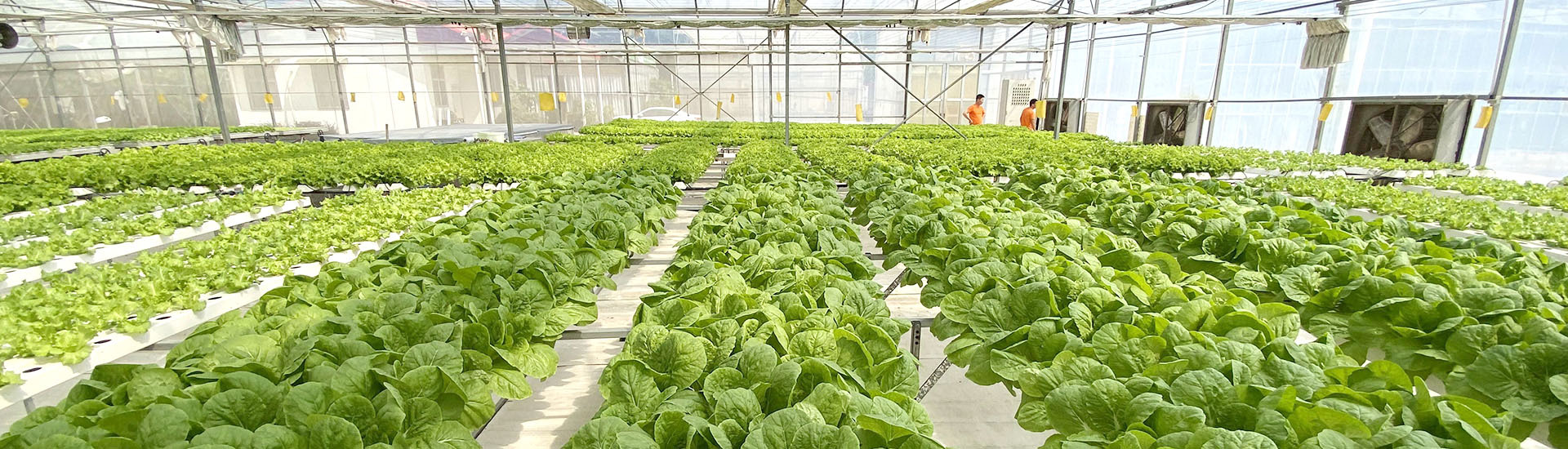
Group leafy plants in Greenhouses 1–3, with adjacent corridors to enable centralized nutrient solution supply—simplifying maintenance and ensuring consistent crop nutrition.
Designate Greenhouse 4 for NFT (Nutrient Film Technique) nursery. Locating it near Greenhouses 1–3 simplifies seedling transportation and allows for unified management, reducing labor and time costs.
Irrigation Head Location: Optimize Water and Energy Efficiency
Your greenhouse layout must be precisely aligned with the irrigation system to minimize waste. The irrigation head should be placed as close to the greenhouses as possible to shorten pipeline lengths, reduce water pressure loss, and lower energy consumption. A rational pipe network layout also simplifies future inspection, maintenance, and repairs—saving time and money in the long run.

Functional Zoning: Streamline Operations
In addition to growing areas, a well-designed greenhouse layout should include dedicated service areas to optimize operation channels. These areas include:
Packing area: For efficient post-harvest processing and packaging, reducing crop damage and improving delivery speed.
Office space: For on-site management, documentation, and coordination, ensuring smooth communication between teams.
Park area: For staff rest and equipment storage, enhancing work efficiency and safety.
All functional areas should follow the farming process to ensure smooth operation routes, minimizing unnecessary movement and maximizing productivity.
Overall Park Coordination: Ensure Orderly and Cost-Effective Operation
Scientific planning of the entire greenhouse park is crucial to avoid layout interference and route crossing. Key considerations include:
Ventilation and drainage: Design adequate ventilation systems and drainage channels to prevent humidity buildup, crop disease, and waterlogging.
Wind protection: Incorporate windbreaks to protect greenhouses from strong winds, reducing structural damage and maintenance costs.
Traffic routes: Optimize passages for both agricultural machinery and manual work, ensuring orderly movement of equipment, crops, and personnel. This reduces congestion and improves overall operational efficiency.
By following these layout design principles, you can build a greenhouse that is efficient, cost-effective, and tailored to your specific needs. As a professional greenhouse EPC provider, we specialize in creating customized layout solutions for large-scale projects—helping you turn your land into a high-yield, sustainable greenhouse operation.
Recommended News
Subscribe to our new news
listen to the voice of every customer.
Address:Unit 804, No.10, Duiying Road,
Jimei District,Xiamen, China,361011
Tel:+86 181 4413 3314
E-mail:prasada@prasada.cn
